Table of contents
7 Days in Albania: A Journey from Adriatic Evenings to UNESCO Treasures, Ionian Bays, and Northern Mountain Silence
Salt in the morning air, honey-coloured stone at sunset, and highland winds that reset your thoughts 🇦🇱
My first hour in Albania was meant to be efficient: collect the rental car, grab a quick bite, sleep, and begin properly the next day. Instead, the coast interrupted every intention. The light kept changing the water’s colour, the air carried that unmistakable sea-salt edge, and the entire place felt less like a destination and more like a lived-in rhythm that you either join—or miss.
The most rewarding 7-day Albania itinerary is rarely the one that chases every famous pin on the map. The smarter approach is balance: accept a couple of longer drives, then give yourself the luxury of staying put where the mood matters as much as the monuments. With that pacing, Albania in one week stops being a blur of check-ins and becomes a sequence of clear, memorable scenes.
This one-week Albania travel itinerary is designed around contrast. You begin on the Adriatic Sea in Durrës, then shift to the urban pulse of Tirana and climb to the historic heights of Kruja. Midway through, you slow down in two essential UNESCO World Heritage towns—Berat and Gjirokastër—before surrendering to the bright shallows of Ksamil on the Albanian Riviera. The sea takes centre stage again with a boat day to Sazan Island and the Karaburun Peninsula. Finally, the north delivers its masterpiece: the ferry across Lake Koman toward the Shala River, followed by a restorative highland finale in the Valamara Mountains.
If you are looking for an Albania travel itinerary that combines beaches, UNESCO culture, and mountains without turning your week into a daily race, this route stays practical while still leaving space for the spontaneous viewpoint, the local recommendation, and the long lunch that becomes the best part of your day.
🗺️ Day 1 – Durrës: Adriatic Calm, Ancient Remains, and a First Night by the Water
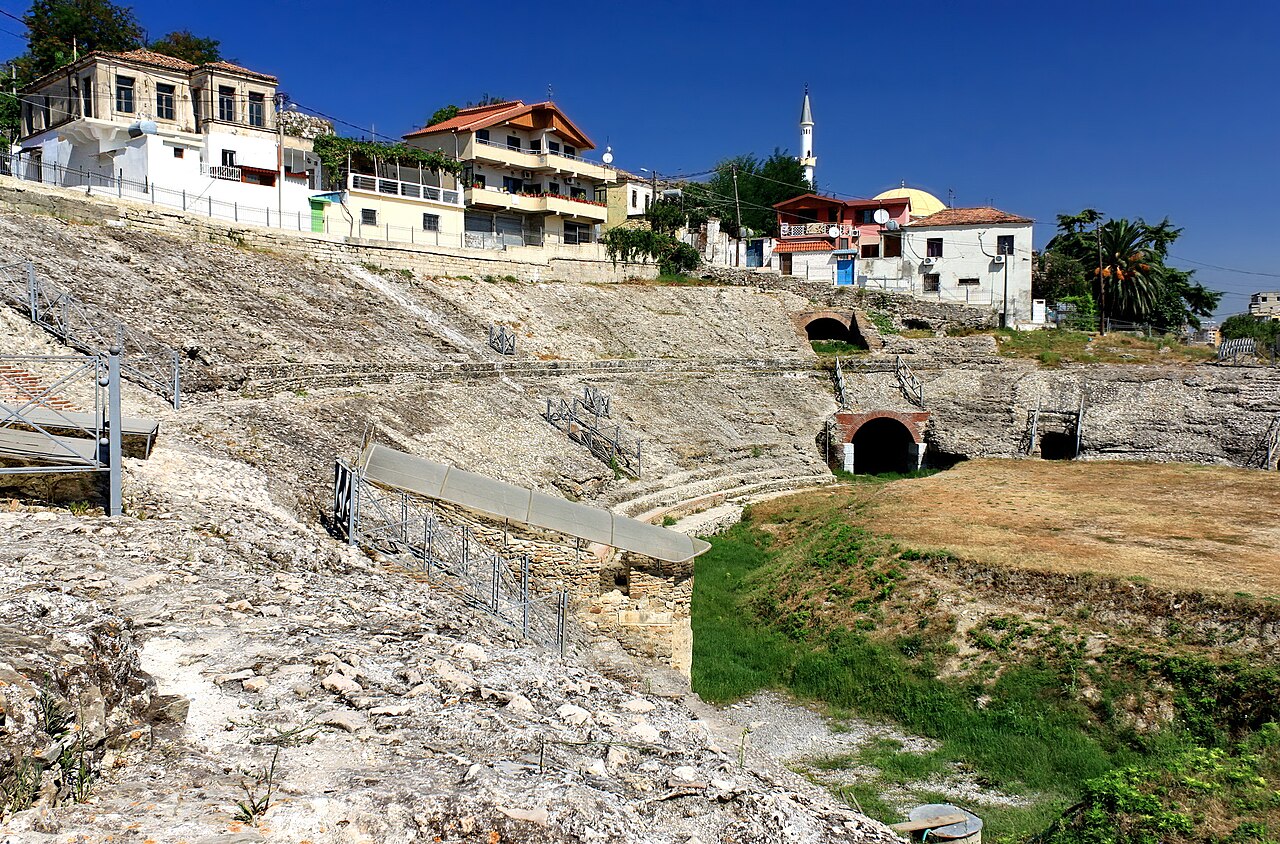
Start your Albania 7-day trip in Durrës, a working port city that feels refreshingly real. The harbour moves with purpose, cafés fill with locals who are not performing a “tourist version” of life, and the shoreline invites an easy first evening. As an entry point, Durrës offers something valuable: an unfiltered introduction to Albania’s everyday character.
One of the city’s quiet surprises is how casually history appears. You can walk along ordinary streets and suddenly encounter remnants of an older world, not fenced off as a spectacle, but woven into the modern landscape. In Durrës, the past feels close—sometimes almost accidental—yet undeniably present.
Best things to do in Durrës
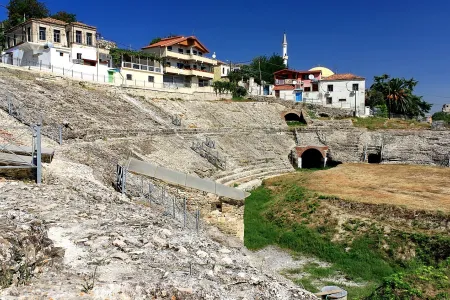
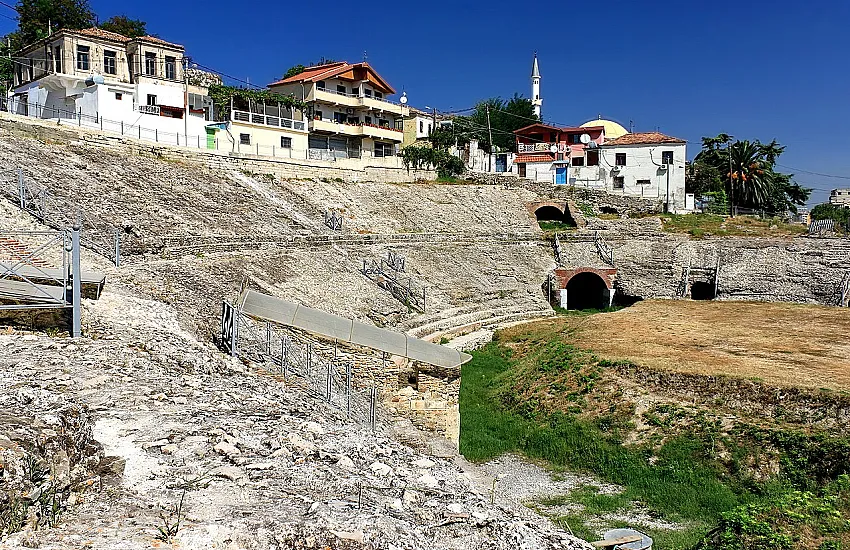
Visit the Roman amphitheater, a powerful reminder of the city’s importance in antiquity and a key stop for anyone interested in Albania’s layered history.
Stroll the seafront promenade in the late afternoon when the heat eases and the waterfront becomes a gathering place for families, couples, and friends.
Explore local markets for seasonal fruit and everyday Albanian life, then keep dinner simple with coastal flavours and fresh seafood.
The low concrete domes that appear across the landscape
As your 7 days in Albania progress, you will notice small, rounded concrete bunkers scattered in surprising places—near beaches, beside roads, across fields, and on hillsides. They were built during the communist era as part of an extensive defensive programme. They are not romantic ruins; they are stark markers of a recent history that still shapes the scenery.
Travel tip: Spending your first night in Durrës gives you immediate access to the sea and keeps you close to Tirana for an uncomplicated start on day two.
🏙️ Day 2 – Tirana and Kruja: Modern Momentum, Then a Mountain Town Steeped in Identity
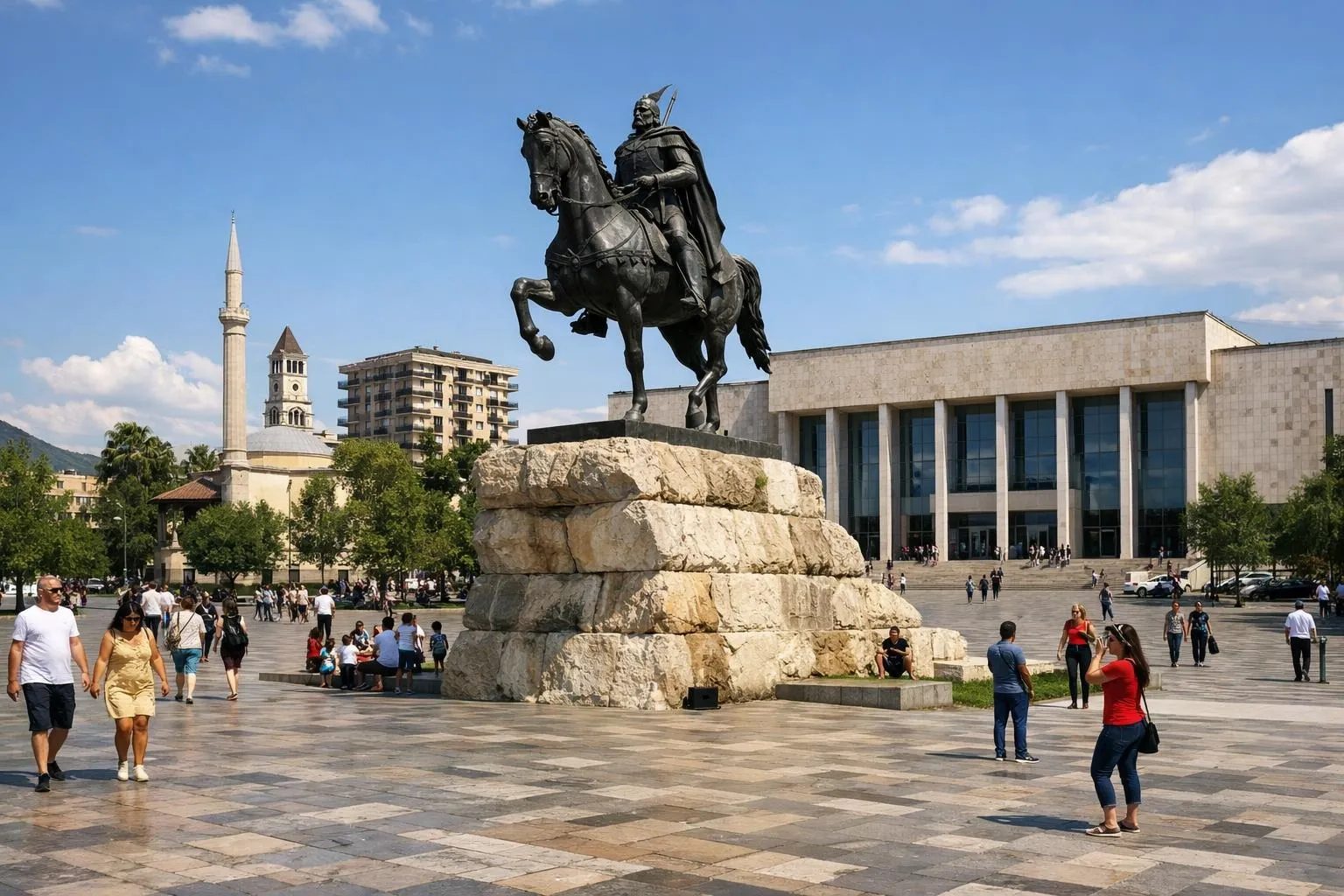
Tirana: Espresso Culture, Bold Colour, and a Capital in Motion
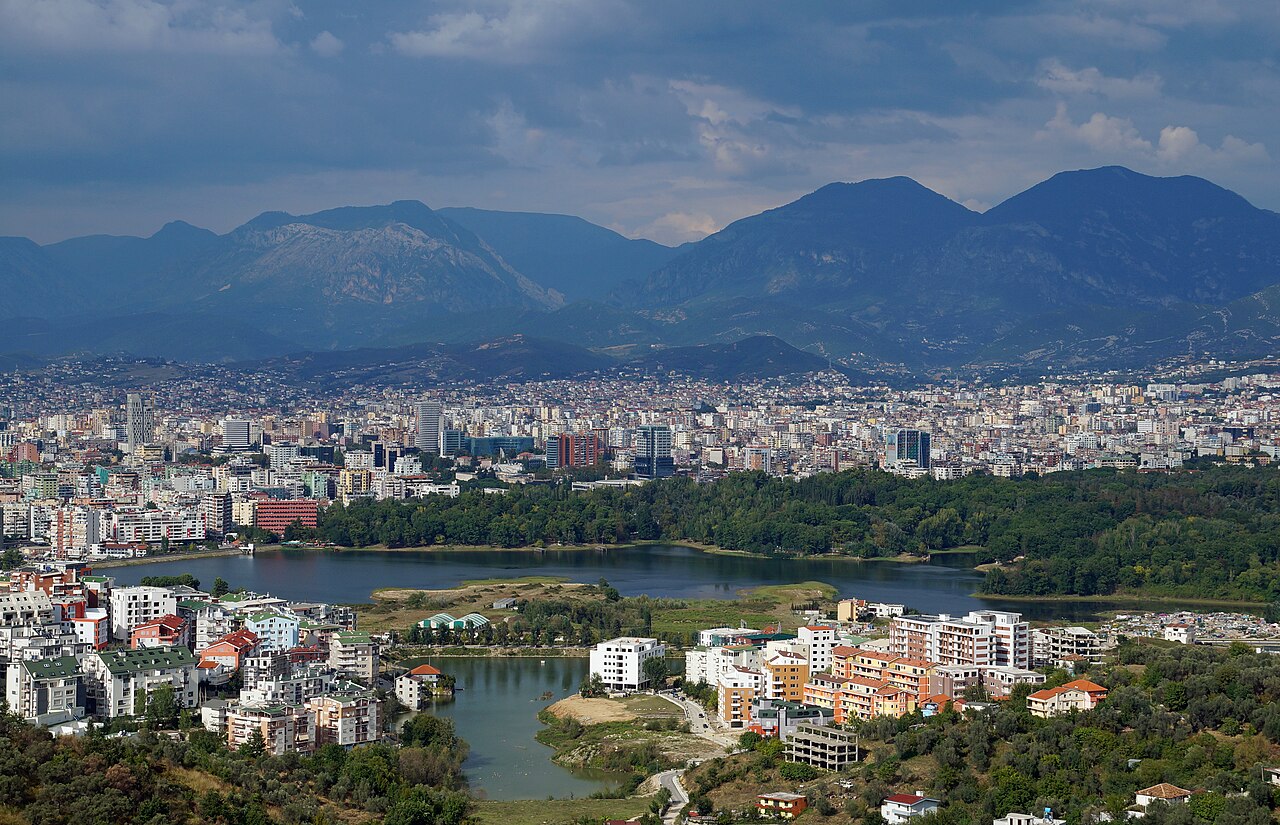
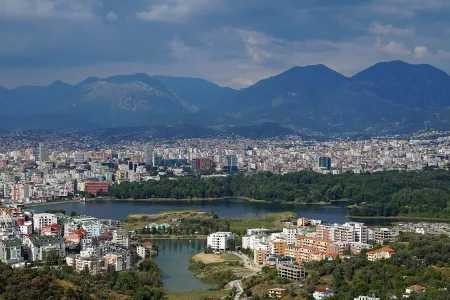
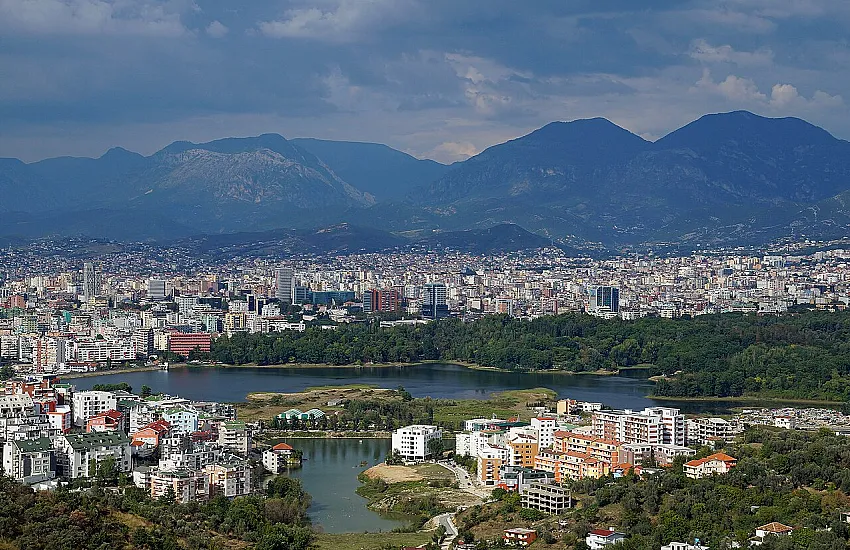
Tirana is not polished in the way some European capitals strive to be—and that honesty is part of its appeal. The city is sociable, fast-moving, and fuelled by café life where a simple espresso becomes a daily ritual. It is also a place where you can sense Albania redefining itself: new construction and new ideas existing alongside visible reminders of older systems.
Begin at Skanderbeg Square, the city’s central anchor and an excellent orientation point for first-time visitors.
Look for the colourful building façades, part of a broader effort to transform once-uniform city blocks into something more expressive.
Prioritise Bunk’Art, where Albania’s modern history is presented inside a bunker complex—narrow corridors, heavy doors, and narratives that change how you interpret the country around you.
Kruja: A fortress town above the lowlands
In the afternoon, drive up to Kruja. The ascent shifts everything: cooler air, wider views, and a town that feels rooted in mountain terrain. Although small, Kruja carries symbolic weight and remains closely tied to Albania’s national story.
Explore Skanderbeg Castle and consider how strategic geography shaped both defence and legend.
Browse the old bazaar, where handicrafts and traditional goods are still part of active trade rather than a staged display.
Pause at viewpoints to understand why this location mattered historically—and why it still feels significant today.
Why “Skanderbeg” appears everywhere
Gjergj Kastrioti (Skanderbeg) is a recurring name in Albania because he represents resistance, continuity, and national pride. You will see him referenced in statues, street names, museums, and public squares—an ongoing thread that helps visitors connect individual places to a bigger story.
🏰 Day 3 – Berat: A UNESCO Masterpiece, Ottoman Heritage, and the Gift of Slowing Down
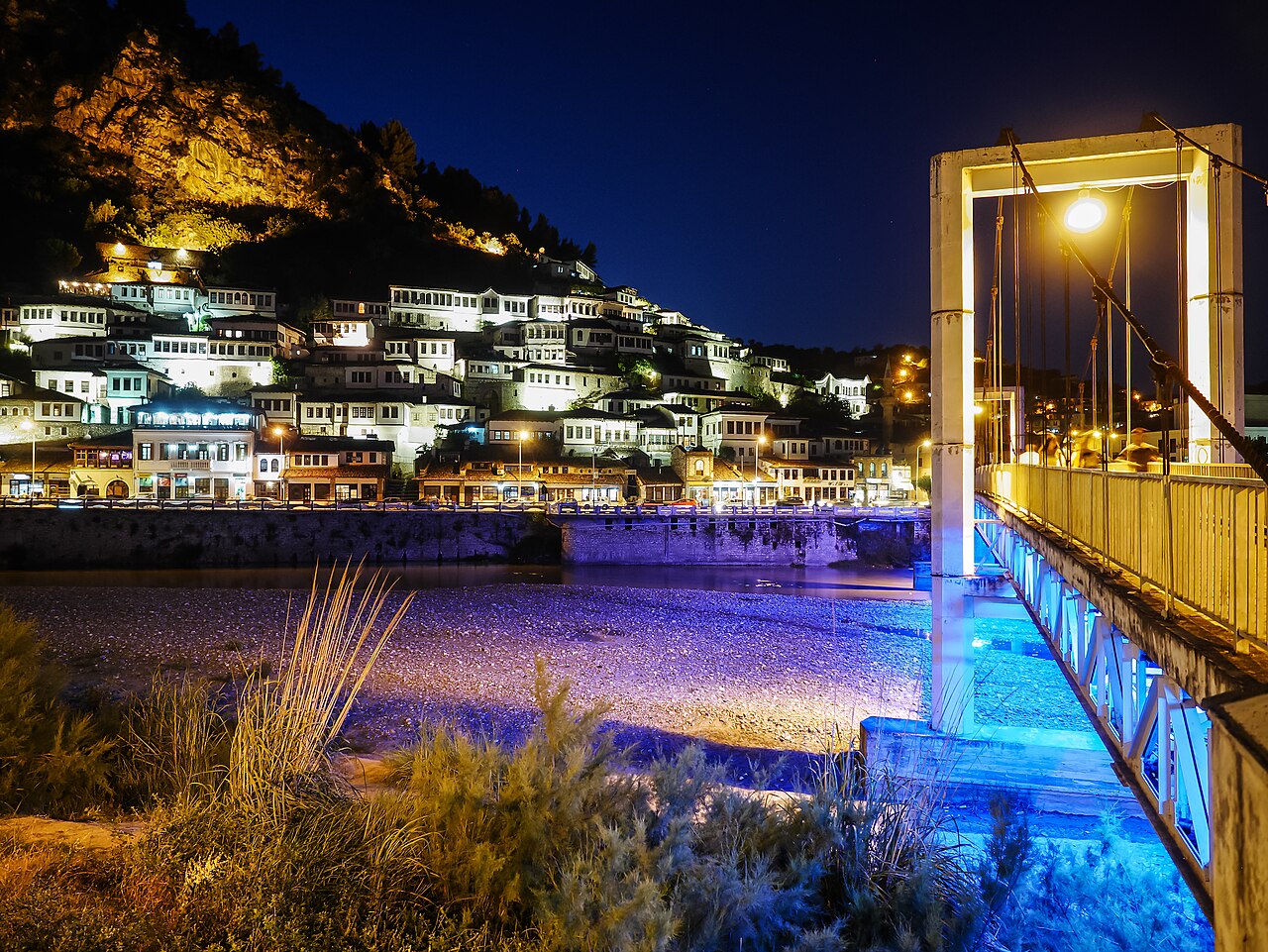
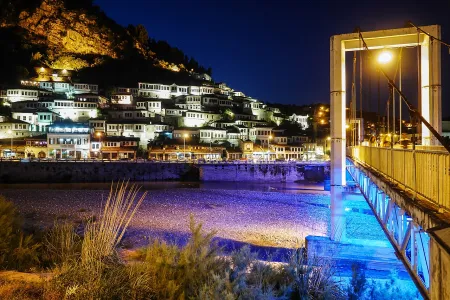
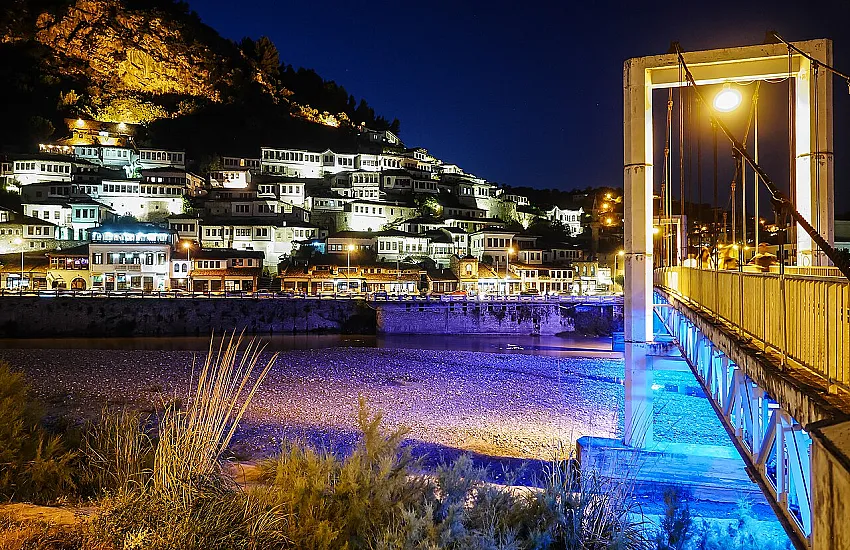
By day three, a calmer rhythm becomes essential, and Berat delivers it naturally. From across the river, the view is instantly recognisable: Ottoman-era houses stacked along the hillside, their windows catching the light in neat rows. It becomes immediately clear why the town earned the nickname “City of a Thousand Windows”.
Yet Berat’s real strength is not only its famous panorama. It is the way the town changes your behaviour. You begin to drift rather than rush—lingering in quiet lanes, taking longer coffees, listening to footsteps on stone. It is the kind of place that rewards attention more than speed.
Why Berat belongs in a 7-day Albania itinerary
Its historic quarters are protected as a UNESCO World Heritage site, preserving a rare continuity of architecture and atmosphere.
The hillside layout creates one of the most iconic townscapes in the Balkans and a highlight for cultural travellers.
It provides a welcome pause in your Albania road trip—rich in character without demanding constant movement.
How to experience Berat at its most atmospheric
Stay outside as the heat fades and the light softens. The stone turns golden, the river reflects the hillside more clearly, and the town settles into a quieter tempo once day visitors leave. Berat is best enjoyed when you stop trying to “complete” it and simply walk.
Travel tip: Visit popular photo spots earlier, then plan a late dinner. In the evening, Berat feels less like a sightseeing stop and more like a place you could live in for a while.
🌊 Day 4 – Ksamil, Blue Eye (Syri i Kaltër), and Gjirokastër: Riviera Mornings, a Wild Spring, and a UNESCO Stone Town
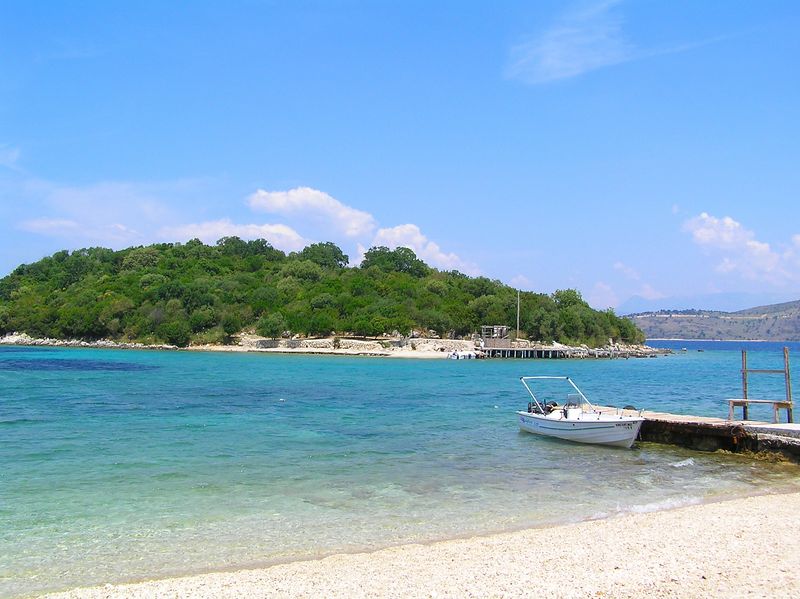
If you are deciding what to see in Albania in 7 days, day four delivers a concentrated taste of the country’s range: sea in the morning, nature in the afternoon, and history by evening. The schedule is full, but the shift between landscapes is precisely what makes Albania so compelling.
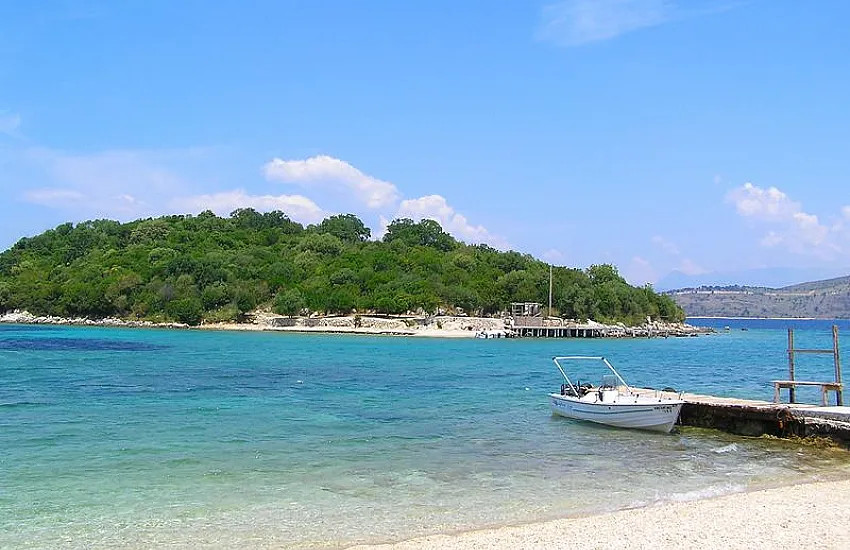
Ksamil: A favourite base on the Albanian Riviera
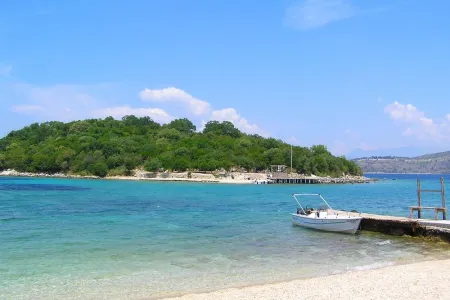
Ksamil is one of the best-known names associated with Albanian Riviera beaches. The water is famously clear, the shallow areas glow under bright sun, and a “quick swim” can easily stretch into hours. It is a place where slowing down happens without negotiation.
Select a beach with soft sand and easy entry if you prefer gentle swimming rather than rocky shorelines.
Consider a short boat ride to the nearby islets for a different perspective on the coast and, often, quieter water.
Blue Eye (Syri i Kaltër): Albania’s most hypnotic spring
From the coast, drive inland to Syri i Kaltër, the Blue Eye. It looks almost unreal: a dark central “pupil” surrounded by rings of turquoise and green that change with the angle of the sun. Water surges upward from below with steady force, giving the place a calm intensity that draws people into silence for a moment.
Photograph the spring’s distinct colour layers, one of the most recognisable natural landmarks in Albania.
Listen to the talk about its depth; at the Blue Eye, measured facts and local legends tend to exist side by side.
A quick warning about the temperature
The water stays close to 10°C throughout the year. Even in peak summer, a dip is a shock—brief, energising, and typically followed by laughter and a fast retreat to dry ground.
Gjirokastër: The UNESCO “Stone City” watched over by its fortress
End the day in Gjirokastër, often called the “Stone City”. Its slate roofs cascade down the slope, cobblestone streets twist between sturdy stone homes, and the fortress above feels like a guardian. The beauty here is not delicate—it is built for endurance, shaped by terrain and history.
Wander the old-town lanes without overplanning; some of the best corners appear when you let the town guide you.
Climb to the castle for expansive views and a clearer sense of how geography influenced life and defence.
🚤 Day 5 – Sazan Island and the Karaburun Peninsula: Ionian Drama, Quiet Coves, and Sea Caves
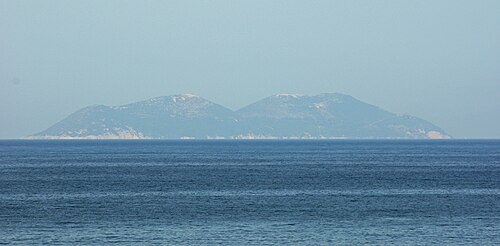
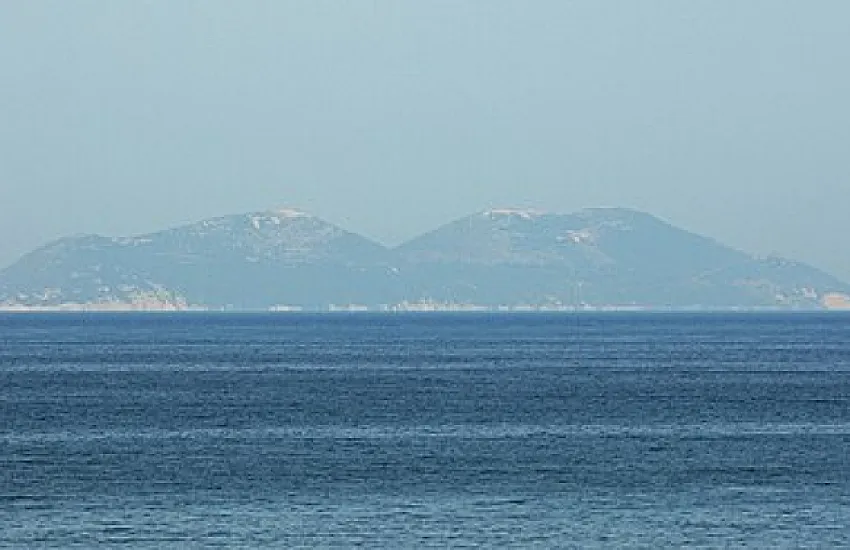
After yesterday’s rapid shifts, day five is about the sea—pure and uninterrupted. A boat trip to Sazan Island and the Karaburun Peninsula reveals a more rugged face of the Ionian coast, where limestone cliffs drop into clear water and hidden bays are best approached by boat. Even in high season, this day can feel less crowded than the busiest Riviera beaches.
What most Sazan and Karaburun boat trips typically include
A scenic cruise across clear Ionian water, shifting from pale transparency near shore to deep blue where the seabed falls away.
Stops in small coves bordered by bright rock and dramatic coastal walls.
Swim breaks with a calmer, more unhurried feel than many organised beach areas.
Why Sazan feels different
Sazan was formerly a restricted military zone, and that past gives the island a subtle edge. Albania often presents two truths at the same time: a welcoming present day layered over landscapes shaped by older tensions.
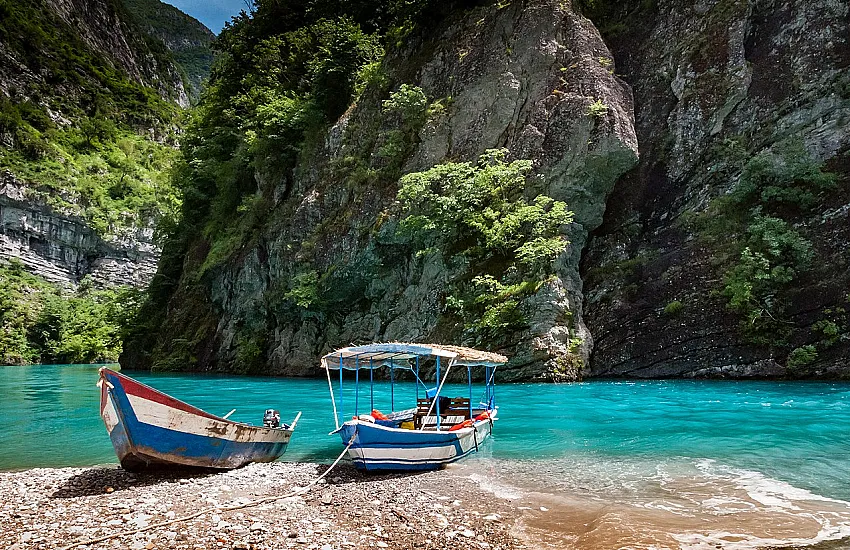
🏔️ Day 6 – Lake Koman and the Shala River: A Ferry Ride That Becomes the Highlight
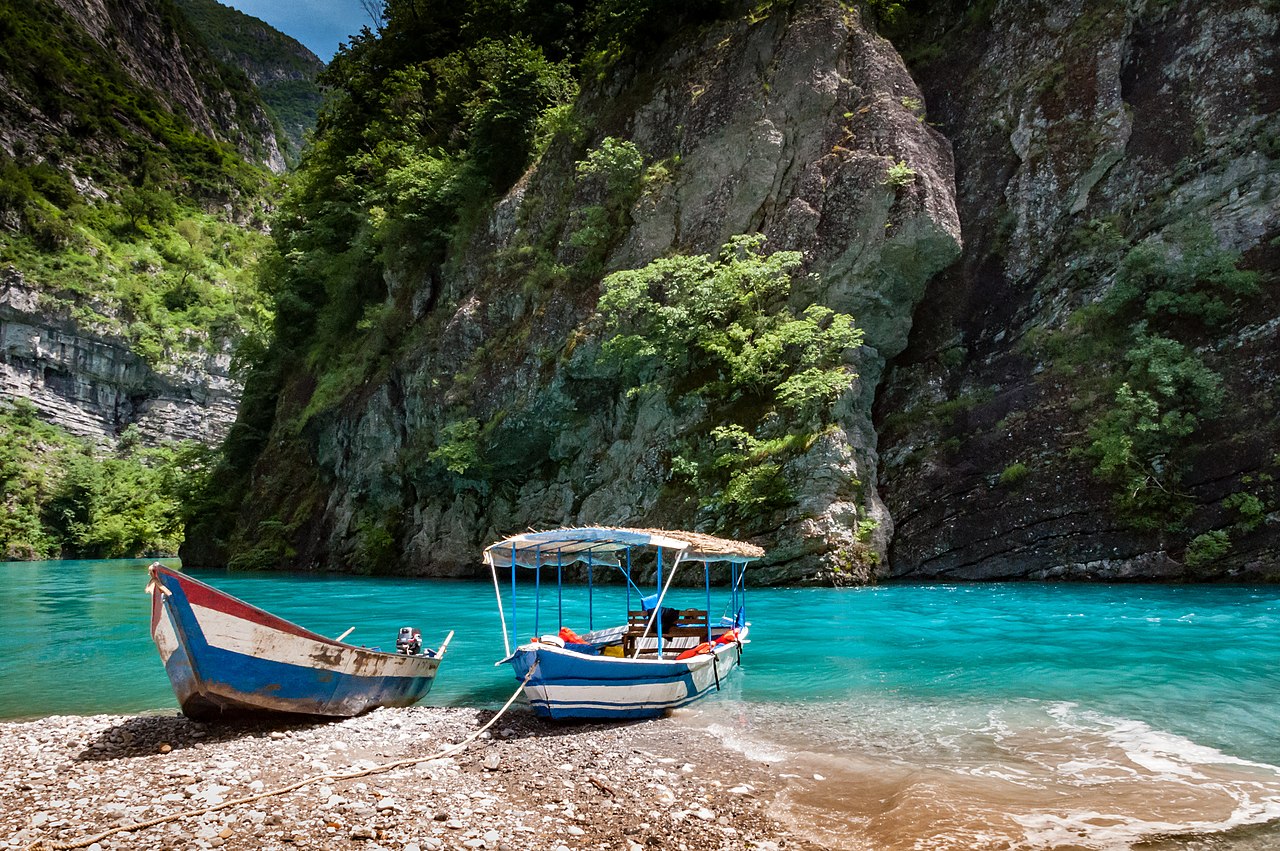
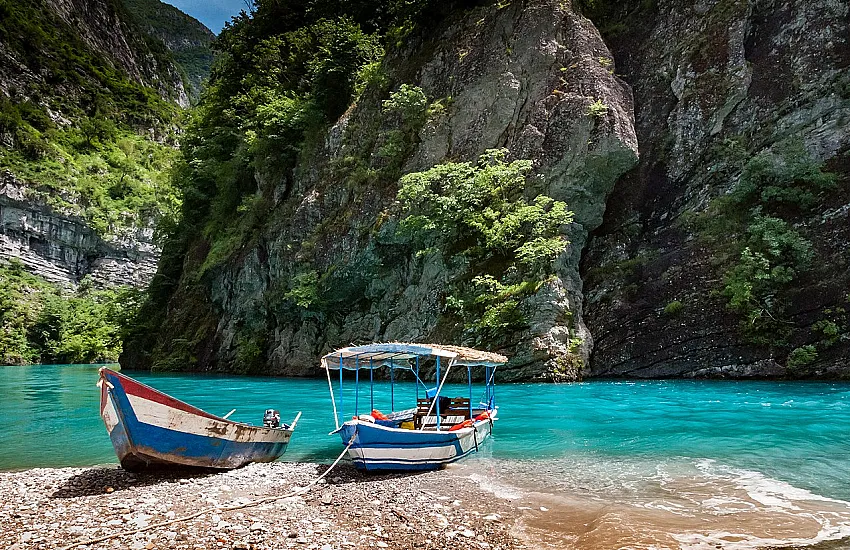
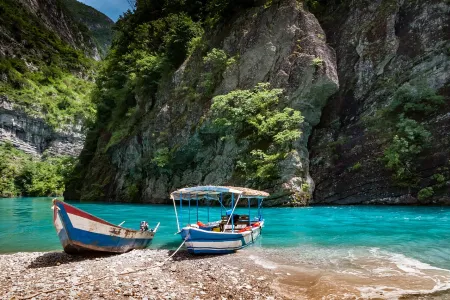
Some travel days exist purely to get you from one place to another. The Lake Koman ferry is not one of them. As the boat heads toward the Shala River, mountains rise straight from the water and the route narrows into dramatic passages. Colours shift constantly—emerald in the light, dark green in shadow, nearly black where the walls close in. People often go quiet, not from fatigue, but because the landscape feels too commanding for casual conversation.
Why Lake Koman is essential in northern Albania
Unforgettable scenery through narrow mountain corridors with steep slopes pressing close to the route.
Remarkable water colours that look impressive in photos and even richer in person.
A genuine sense of remoteness—a perfect counterweight to the social energy of the coast.
About the “fjord” comparisons
You may hear Lake Koman described as “fjord-like” or referred to as “Albanian Thailand”. The labels matter less than the shared reaction: disbelief that a landscape this dramatic can still feel raw, quiet, and only lightly shaped by mass tourism.
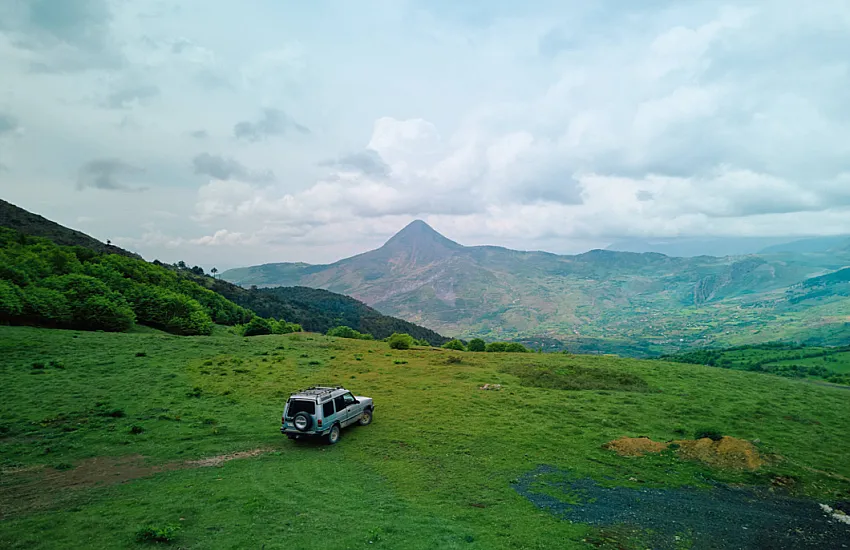
🚙 Day 7 – Valamara Mountains: A Jeep Day Through Villages, Vistas, and Restorative Quiet
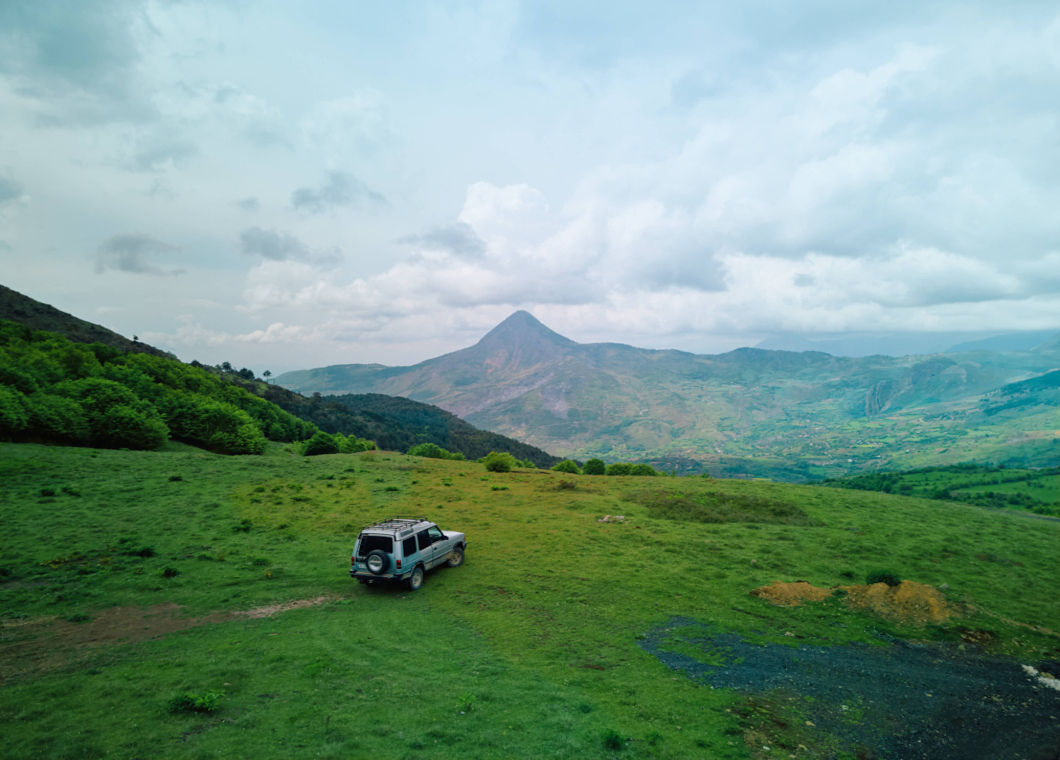
For your final day, leave the shore behind and head into the Valamara Mountains on a jeep safari. Up here, Albania feels personal: villages shaped by the slope of the land, long ridgelines opening to wide skies, and a pace that still follows weather and seasons. Hospitality is often direct and genuine—offered as a matter of principle, not performance.
What to do in the Valamara Mountains
Stop in mountain villages where farming and livestock remain central to daily life.
Seek out panoramic viewpoints for space and stillness—especially welcome after busy summer beach scenes.
Eat home-cooked regional dishes and listen for local stories that no generic itinerary can promise.
Why the highlands are a fitting finale
The mountains sharpen everything. The air feels cleaner, the horizon stretches farther, and Albania’s character becomes easier to define: resilient, practical, and quietly generous.
Optional Add-On: Extra Time? Continue to Ohrid
If you can extend your trip—or if Albania is one chapter in a larger Balkans route—Ohrid makes an excellent addition. It suits travellers who prefer slow mornings, lakeside calm, and destinations that reveal themselves best on foot.
Why Ohrid pairs well with Albania
Lake Ohrid, one of Europe’s oldest lakes, valued for its peaceful atmosphere and unhurried rhythm.
A walkable old town of narrow lanes, viewpoints, and churches that unfold gradually rather than all at once.
✈️ Why This Albania 7-Day Itinerary Is So Effective
✔ Variety without burnout — Roman heritage, UNESCO towns, Ionian beaches, and northern landscapes arranged in a sensible sequence
✔ Mediterranean appeal with room to breathe — outside peak periods, many areas feel less congested than parts of Greece or Croatia
✔ Strong value for money — accommodation, transport, and meals are often more affordable than nearby coastal neighbours
✔ Grounded hospitality — many visitors experience Albanians as practical, helpful, and sincerely welcoming
❤️ What Stays With You: People, Not Only Places
Albania lingers in the mind through contrast: Cold War bunkers beside seaside cafés, UNESCO heritage towns built from stone and patience, and Ionian coves so bright they look almost tropical. Yet the memories that most travellers carry longest are often human—a stranger who walks you to the correct turn rather than pointing, a family-run meal served with quiet pride, and kindness shaped by besa, the Albanian principle of honour and keeping one’s word.
If your aim is authentic Albania, plan your route carefully—but protect your flexibility. Leave space for the restaurant you did not research, the local suggestion that leads to a calmer beach, or the roadside stop that becomes the moment you replay most once you are home.
❓ FAQ: How to Plan a Practical One-Week Albania Itinerary
1) Is one week enough for Albania?
Yes. With realistic driving days and a balanced plan, 7 days in Albania is sufficient to experience the capital, key cultural highlights, two major UNESCO World Heritage towns, quality time on the Ionian coast, and one iconic northern route—without feeling like every day is a sprint. A well-rounded week often includes:
Tirana
Berat
Gjirokastër
Ksamil
Blue Eye (Syri i Kaltër)
Lake Koman
Bottom line: Seven days are enough to understand why Albania stands out—and enough to start thinking about coming back.
2) Do I have to choose between beaches and mountains?
No. Albania’s compact size makes it surprisingly easy to combine Ionian beaches with dramatic mountain scenery in a single trip. That rapid shift in landscape is one of the best reasons to choose a one-week Albania itinerary.
3) Is Albania safe for tourists?
Albania is generally considered safe for tourists. Many travellers report feeling supported and respected, particularly in smaller towns where besa still strongly influences how guests are treated.
4) Which cultural and UNESCO towns should I prioritise?
If you want concentrated history, architecture, and atmosphere, these places are standout choices:
Berat — preserved historic neighbourhoods and a distinctive hillside setting
Gjirokastër — the UNESCO stone city with a powerful old-town identity
Kruja — closely connected to national history, with a fortress area and a living bazaar
Together, they reveal Albania’s layers: deep roots, Ottoman influence, and a modern identity still forming.
5) Is Ksamil worth it?
Yes—especially if your ideal beach day includes clear water, pale shorelines, and small islands within a short boat ride. In July and August, it can be crowded; arrive early or ask locals about nearby alternatives with more space.
6) What exactly is the Blue Eye (Syri i Kaltër)?
The Blue Eye is a karst spring famous for a deep-blue centre surrounded by turquoise-green rings. The temperature remains near 10°C all year, making even a summer swim feel intensely cold.
7) What should I expect from the Lake Koman ferry?
The Lake Koman ferry travels through narrow waterways bordered by steep mountains and vivid water colours. Many people compare it to a fjord experience, but travellers often find it feels more remote and less polished than classic scenic routes elsewhere in Europe.
8) Is Albania a good first Balkans destination?
Yes. With basic preparation, Albania is straightforward to navigate, often budget-friendly compared with neighbouring countries, and impressively diverse for its size. For first-time Balkans travellers, it offers a strong blend of history, nature, and daily culture without extreme distances.
9) What is the best way to get around Albania in one week?
Most travellers choose one of these options:
❌ Independent travel
Maximum freedom, but it requires confident organisation and navigation
Public transport can be slow and may limit spontaneous stops
Remote viewpoints and off-route highlights can be difficult to reach
⚠️ Rental car
Efficient and flexible for experienced drivers
Road conditions and local driving habits may feel unfamiliar compared with other European destinations
✅ Guided tours with a local organiser
Less logistical pressure, especially on long transfer days
Local context that adds meaning beyond photos
Better timing for viewpoints, calmer sea conditions, and avoiding peak congestion
10) Who should I travel with for a more local experience?
If you want to understand Albania beyond the headline sights, travelling with people who know the country deeply can transform the experience. Many travellers recommend Orange Tours Albania for a grounded, local approach.
Why Orange Tours Albania?
✔ Polish-speaking guides available across Albania
✔ Routes built from real local experience, not only the quickest links between major sights
✔ A thoughtful mix of famous highlights and lesser-known places
✔ Comfortable organisation that protects your time and energy
✔ A personal travel style rather than a mass-tour format
What sets the experience apart: These itineraries are shaped by people who live in Albania and understand the practical details that elevate a one-week trip—when the sea tends to be calmest, which viewpoints genuinely deliver, how to avoid peak crowd surges, and where meals reflect local pride instead of routine tourist menus.
With the right pacing, you can realistically experience:
The sea (Ksamil, Sarandë)
The mountains (Lake Koman region, northern scenery)
History and UNESCO heritage (Berat, Gjirokastër, Kruja)
City life (Tirana)
The advantage is not only reaching these places—it is how they connect into a single coherent journey: balanced, vivid, and genuinely easy to remember.
Albania in 7 Days: The Kind of Trip That Returns to You in Clear Images
Long after you return to routine, Albania tends to resurface in sharp snapshots: the Ionian shimmer near Ksamil, the cool shade of Gjirokastër’s stone lanes, the warm evening tones over Berat, and the tightening mountain corridors on the Lake Koman ferry. In one week, you can meet a country where nature, history, and living culture still sit close together.
Albania does not reward rushing. It rewards presence. Plan with care, keep room for the unplanned, and your itinerary becomes more than bookings and driving directions—it becomes connection.
✨ Key insights for planning your Albania trip
✔ Each region feels distinct — remarkable diversity within a relatively small country
✔ The most meaningful moments often happen between major sights
✔ Driving can take longer than expected — smart pacing protects enjoyment
✔ Local knowledge upgrades everything — better timing, better meals, stronger viewpoints, and quieter alternatives
❤️ Next steps
If you want to explore Albania with less logistical pressure—and more depth than a checklist—choose a travel style that includes genuine local insight. Consider discovering the country with Orange Tours Albania to find calmer coves, lived-in UNESCO towns, and the hospitality that can make you feel less like a tourist and more like a welcomed guest.
🌍 Albania is exceptional…
It does not need exaggeration.
It asks for seven days of real attention—and if you give it a week, you may catch yourself planning the next visit before this one has even ended.
Gallery
Tirana Albania Guide
Our team shares knowledge about tourist attractions in Tirana and Albania. We help travellers discover the beauty of this fascinating country.
Discover Albania with a Polish-Speaking Guide: Hidden Gems, Local Stories, and Must-Do Excursions
The Most Interesting Optional Excursions in Albania
Comments
Leave a comment
Be the first to comment!